









In the northern part of Munich, amidst manicured streets and modern junctions, stands a building that is impossible to mistake for another. The «Allianz Arena» is not just a stadium. It is a symbol of the city, an architectural masterpiece, and one of Germany's most recognisable landmarks. Here, futuristic design, engineering prowess, and the Bavarians' love for football come together.
Today the arena is home to the club Bayern Munich, a meeting place for tens of thousands of fans and a cultural centre that attracts tourists from all over the world every year.
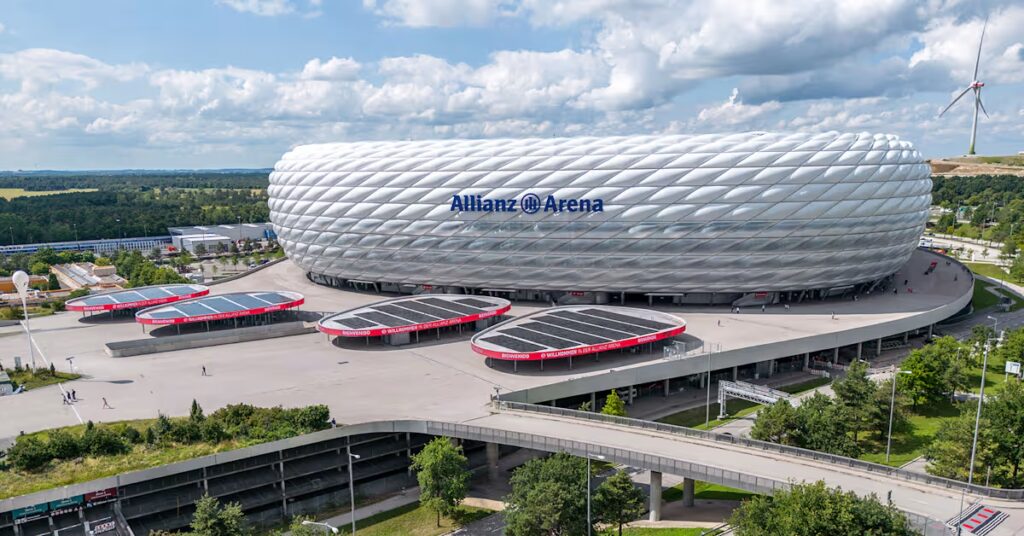
➤ Allianz Arena – stadium overview
Anyone who has seen the stadium with their own eyes says the same thing: it's impressive at first glance. The Allianz Arena, built at the beginning of the 21st century, has a capacity of around 75,000 spectators for Bundesliga matches and 70,000 for international fixtures. For Germany, it is one of the largest stadiums, and for Bavaria, it is the main sporting venue.
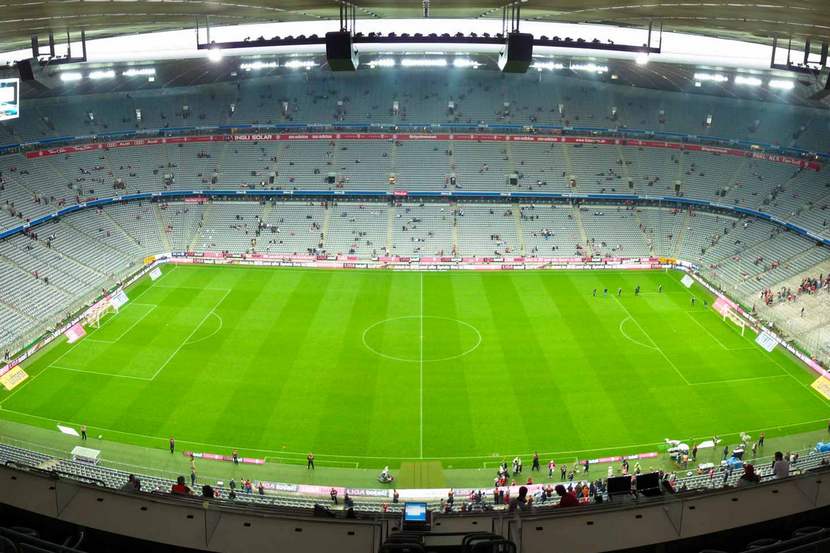
But it's not just the scale that's impressive. More important is how every detail has been thought out here for the comfort of spectators. Wide aisles, comfortable seats, perfect visibility from any point – all this creates a sense of presence right in the heart of the action. Bayern's home games draw full houses, and international tournaments turn Munich into the epicentre of world football, especially for those interested. sports betting and follows matches in real time.
Architecture and light show
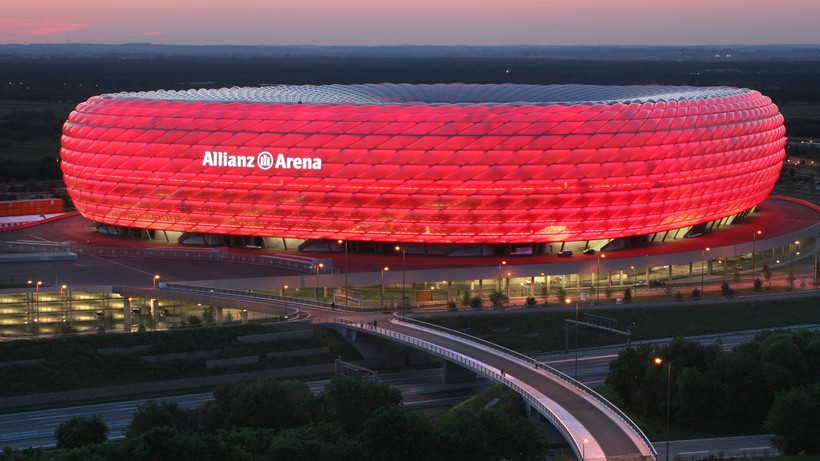
One of the arena's main features is its facade. It consists of 2,760 ETFE panels, which change colour and create stunning lighting effects. Over three thousand shades of backlighting allow the stadium to be transformed into a living work of art.
During Bayern matches, the facade is painted a deep red. If international games are taking place, the panels shine white. Sometimes organisers choose unusual colour combinations for specific events. At night, the stadium can be seen from many kilometres away: in the darkness, it resembles a huge lantern or a ship floating above the city.
This unique lighting has made the «Allianz Arena» a true architectural icon of Germany. Tourists often come here just to see the facade shimmer with colours, creating a unique atmosphere.
➤ History of construction
In the late 1990s, it became clear to the authorities and local residents that Munich's old Olympic Stadium was no longer meeting spectators' needs. In 2001, the city authorities put the issue of building a new sports facility to a referendum, and the majority of residents supported the project.
The main investor became the insurance company Allianz SE, which signed a 30-year contract for the naming rights of the arena. The project was entrusted to the renowned Swiss architects – Jacques Herzog and Pierre de Meuron, laureates of the prestigious Pritzker Prize. Their task was not only to build a functional stadium but also to create a new symbol for the city.
The official opening took place on 30 May 2005. Just a few days later, the stadium hosted its first friendly matches: FC Bayern played against the club Munich 1860. Since then, the stadium has been repeatedly renovated: in 2015, the VIP areas and stands were modernised, and in 2018, a new lighting system was installed, expanding the palette of available colours.

➤ Interesting facts about construction
Construction began in October 2002 and lasted for almost three years. The total cost of the project was around 340 million euros, making the Allianz Arena one of the most expensive stadiums in Europe at the time.
During excavation work, archaeologists discovered the remains of ancient Roman settlements and numerous artefacts dating back to the 3rd century. These findings have become an important part of Munich's history and are on display in the city museum today.
Another detail is the engineering solutions for safety. The design provides a wide circular view, and the evacuation system allows the stadium to be vacated in a matter of minutes, even when it's at full capacity.
The Allianz Arena today
Today the arena is a multi-functional centre that thrives on more than just football. It hosts:
- international boxing matches;
- Concerts by world-famous stars;
- exhibitions, conferences, and presentations;
- corporate events and sports festivals.
Particular attention should be paid to the «Bayern» museum, located right inside the stadium. It is the largest club museum in Europe, featuring over 1200 exhibits: from the team's first trophies to personal items of legendary players, including Franz Beckenbauer's boots and Gerd Müller's shirt.
Special tours are provided for tourists. Visitors can walk along the tunnel that the footballers use to enter the pitch, peek into the changing rooms, and visit the media centre. This makes the Allianz Arena popular with those visiting Munich, even outside of the football season.
Architectural gem of Europe
The stadium's form resembles a giant pillow or a futuristic ship. The interior space is designed so that visibility from any seat is perfect. A special acoustics system creates an immersive effect – the chants of the fans can be heard even in the upper tiers.
Hundreds of specialists work at the stadium. They monitor the condition of the pitch, maintain the equipment and ensure the safety of spectators. Significant attention is paid to ecology: a rainwater harvesting system is used to water the pitch, and energy-saving technologies help reduce electricity consumption.
➤ Most significant events
Since the opening of the Allianz Arena, many major events have taken place there. Among them are:
- The 2006 World Cup - the stadium hosted several matches, including the opening of the tournament.;
- The 2012 Champions League final was a dramatic encounter between Bayern Munich and Chelsea, ending in a penalty shootout.;
- The 2020 European Championship – three group stage matches and a quarter-final;
- Philipp Lahm's farewell match – the legendary Bayern captain played his last match right here;
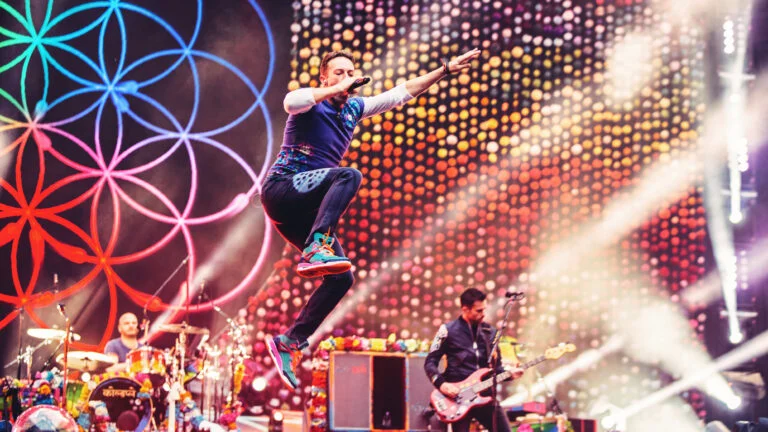
- The Coldplay concert in 2017 – the stadium gathered over 70,000 spectators.
AC/DC, Ed Sheeran, Robbie Williams, Taylor Swift, and many others performed in the arena. Thanks to its well-thought-out acoustics and stage transformation system, the stadium is ideally suited for large-scale concerts and festivals.
Beyond football matches and loud concerts, life at the Allianz Arena doesn't stand still for a single day. Exhibitions of rare sporting artefacts are held here, street culture festivals take place, esports tournaments are organised, and even large-scale corporate events are hosted. At times, the stadium transforms into a vast city centre, drawing not only fans but also those who want to experience the atmosphere of something grand.
During the off-season, the arena seems to change its character. Instead of the echoing shouts from the stands, you can hear children's laughter, as family tours are most often held at this time. Guides recount stories of legendary matches, show the Bayern players« changing rooms, and lead you through the very tunnel that the footballers emerge from onto the pitch. Many admit that it is at this very moment that they get goosebumps – as if for a second they become part of the team.
There's also its own magic behind the scenes. In the media centre, you can sit in the commentators« seats, feel like a Champions League journalist, and look at the stadium through the eyes of those who tell the world about football legends. One visitor wrote in their reviews: »Standing on the podium where Lewandowski emerges and hearing the roar of the stadium on a recording is better than any souvenir.".
How to get to the stadium
«The Allianz Arena is located in the Fröttmaning district in the north of Munich, just 10 kilometres from the city centre. The location was not chosen by chance: there is enough space for parking, convenient transport links and pedestrian zones. You can get here by:
- on the U6 underground line, which leads directly to Fröttmaning station;
- by bus and taxi;
- on your bike along dedicated cycle lanes.
Spacious car parks are provided for motorists. A well-organised transport network helps to avoid traffic jams even on days of major matches. This turns the Allianz Arena into not just a stadium, but a true benchmark of world-class sports infrastructure – a place where architecture meets emotion, and technology serves the spectacle.