








FC Bayern Munich has long been a symbol of German football and a stable presence on the European stage. Behind the titles, records, and eras stand specific individuals. Their decisions on the pitch, personalities in the dressing room, and behind-the-scenes influence have shaped the club's DNA. This in-depth review features ten figures whose careers most vividly illuminate Bayern's journey from a bold post-war team to a global brand. For each hero, we will examine a brief biography, style, achievements, and influence on the club's philosophy and football as a whole.
➤ Club context
Bayern Munich combines three pillars of success:
- A high standard of daily work, discipline, and a desire to dominate every match.
- A developed academy and the ability to integrate pupils alongside top invitations.
- A pragmatic guide and financial model where sporting ambitions are underpinned by sustainable revenues and sound investments.
The legends below either laid these foundations or strengthened them by their example.
➤ Franz Beckenbauer
Biography and journey
Franz Beckenbauer made his debut for Bayern Munich in 1964 and remained the face of the club until 1977, after which he played for New York Cosmos and Hamburg. He played 439 matches, scored 64 goals, and provided 80 assists for the Munich club. He played 103 times for the German national team and scored 14 goals.
Game profile and contribution
Beckenbauer pioneered the libero role. He didn't just break up attacks, he organised the team's exit from defence and initiated positional attacks. His game combined elegance, tactical thinking, and leadership. Thanks to him, Bayern's defensive line became a launching pad for sustained attacks.
Achievements
With Bayern, Franz won the European Cup three times and the German championship four times. He became World Champion with the national team. This isn't a dry list, but evidence of systemic dominance and his role as an organiser.
Influence and legacy
Beckenbauer established the 'playing defender' principle, setting the standard for future generations of centre-backs and defensive midfielders. At club level, he cemented the philosophy of dominating through ball possession and intelligent positioning. His approach to leadership, calmness under pressure, and ability to make the right decisions became a benchmark for subsequent captains.
➤ Gerd Müller
Biography and journey
Gerd Müller joined Bayern in 1964 and played for the club until 1979. He then played in the USA for Fort Lauderdale Strikers. For the Munich club, he made 607 appearances, scored 566 goals, and provided 71 assists. For the German national team, he played 62 matches and scored 68 goals.
Game profile and contribution
Müller possessed a unique goal-scoring instinct. He had an excellent feel for space in the penalty area, could turn quickly, shoot instantly, and was constantly looking for a shooting position. His play highlighted the role of a finisher, who translates the overall team pattern into a result.
Achievements
He won the European Cup three times with Bayern Munich. He led his country to the 1974 World Cup title. His personal records and fruitful seasons turned his statistics into a benchmark for forwards.
Influence and legacy
Müller created the standard for a number nine at Bayern. Any centre-forward at the club is inevitably compared to him. He proved that even with overall tactical complexity, the final strike can still be decisive. His effectiveness has shaped the expectation of Bayern as a team that will always find a way to score.
➤ Karl-Heinz Rummenigge
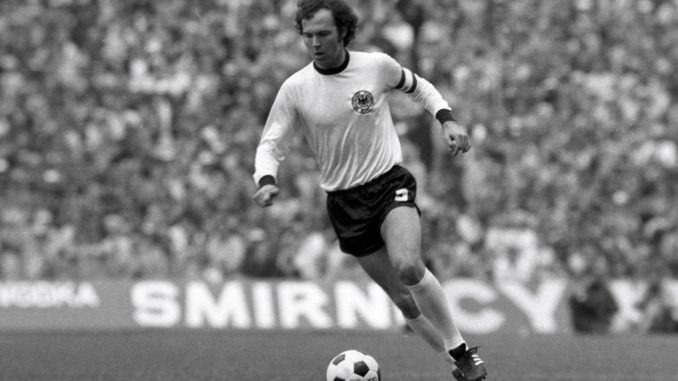
Biography and journey
Rummenigge made his debut for Bayern in 1974, played 424 matches for the club and scored 217 goals, providing 97 assists. He went on to play for Inter Milan and Servette. For the German national team, he played 95 matches and scored 45 goals.
Game profile and contribution
Karl-Heinz combined power, speed, and technique. He played as a forward and a second striker, often dropping deep and creating space for his teammates. His ability to play with his back and face to goal made Bayern's attack multi-layered.
Achievements
A two-time winner of the Ballon d'Or and a two-time German champion. His individual accolades served as confirmation of Bayern's status as a platform for world-class players.
Influence and legacy
Rummenigge's influence extended beyond the pitch. In leadership roles, he transformed Bayern into a global brand with a sustainable business model and a sporting strategy based on balancing the academy and player recruitment. This managerial legacy is just as important today as his goals in the 1980s.
➤ Lothar Matthäus
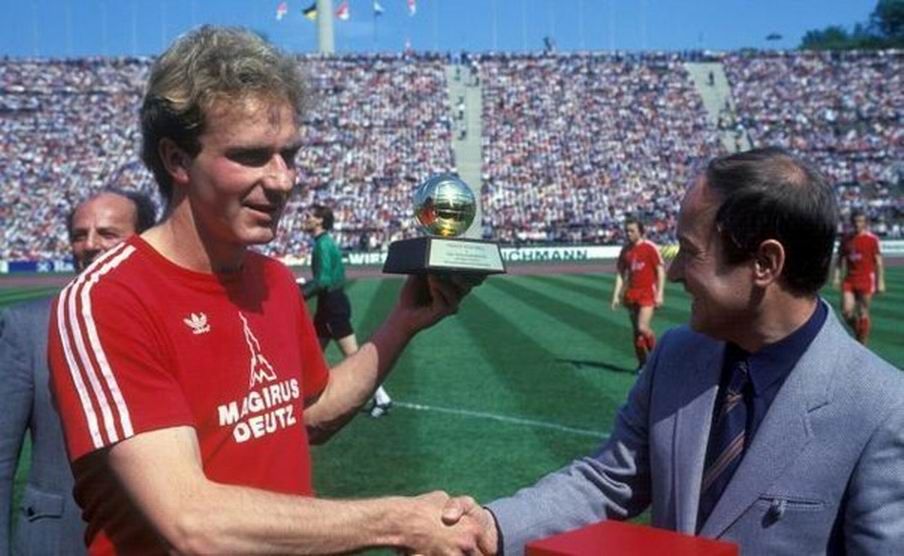
Biography and journey
Matthäus played for Bayern Munich from 1984–1988 and 1992–2000. In Munich, he made 410 appearances, scoring 100 goals and providing 85 assists. Between these spells, he played for Inter Milan and finished his career at New York MetroStars. He represented the German national team 150 times, scoring 23 goals.
Game profile and contribution
Matthäus was a versatile player. He played as both a central midfielder and a libero. His strengths included stamina, long passes, and powerful shots. His leadership qualities and discipline made him an organiser of the tempo and structure of the game.
Achievements
He became the 1990 World Champion and a seven-time German champion. His career demonstrates how a player can adapt to different eras and tactical systems while maintaining an impact on the outcome.
Influence and legacy
Lothar established the archetype of the late 20th-century Bayern captain. He embodied a combination of athleticism and tactical intelligence. His example shows that leadership is not just about emotions, but also about daily work, professional demands on oneself and one's teammates.
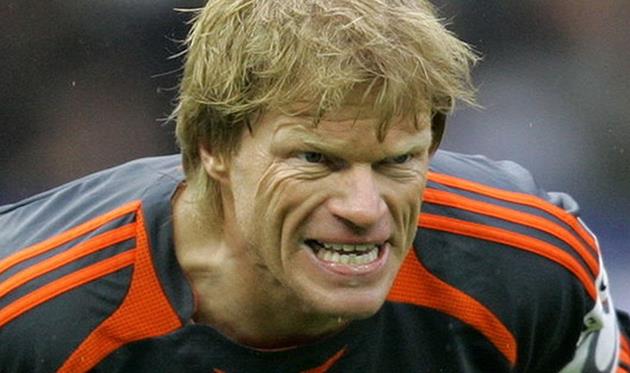
➤ Oliver Kahn
Biography and journey
Oliver Kahn joined Bayern in 1994 from Karlsruher SC. He played 632 matches for the Munich club, becoming one of the most recognisable figures in world football. He played 86 matches for the German national team.
Game profile and contribution
Kahn was distinguished by his reactions, work on the line, and commanding the penalty area. He consistently kept the defence alert, and his character set the highest level of intensity. In crucial moments, he often made difficult saves, which changed the psychology of matches.
Achievements
Victory in the 2001 Champions League and eight German championship titles cemented his status as one of the best goalkeepers of his time. Personal awards and reputation enhanced Bayern's image as a team with the strongest defence.
Influence and legacy
Kahn instilled a culture of accountability. His approach to the game and pursuit of perfection set a standard for club goalkeepers, as well as for young defenders. After retiring, Kahn took on management positions, continuing to influence the team's development strategy.
➤ Philipp Lahm
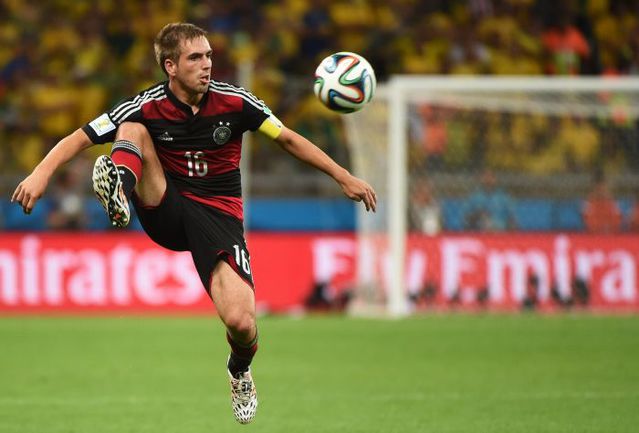
Biography and journey
Philipp Lahm came through the Bayern academy, had an early career loan spell at Stuttgart, then returned and became captain. He played 517 matches for the Munich club, scoring 16 goals and providing 64 assists. For the German national team, he made 113 appearances and scored 5 goals.
Game profile and contribution
Lahm is known for his versatility. He played as a right-back and left-back, and under Guardiola, he successfully moved into a defensive midfield role. His strengths included positional awareness, passing accuracy, and strategic thinking. He set the tempo of attacks, reading the game several steps ahead.
Achievements
The 2014 World Champion and eight-time German champion. He became a bridge between generations, connecting the era of Robben and Ribéry with the arrival of new leaders.
Influence and legacy
Lam demonstrated a model of quiet leadership. He rarely raised his voice, but always set a high standard of quality. His ability to unerringly choose solutions during difficult phases of the match became part of the textbook for young defenders at Bayern and Germany.
➤ Thomas Müller
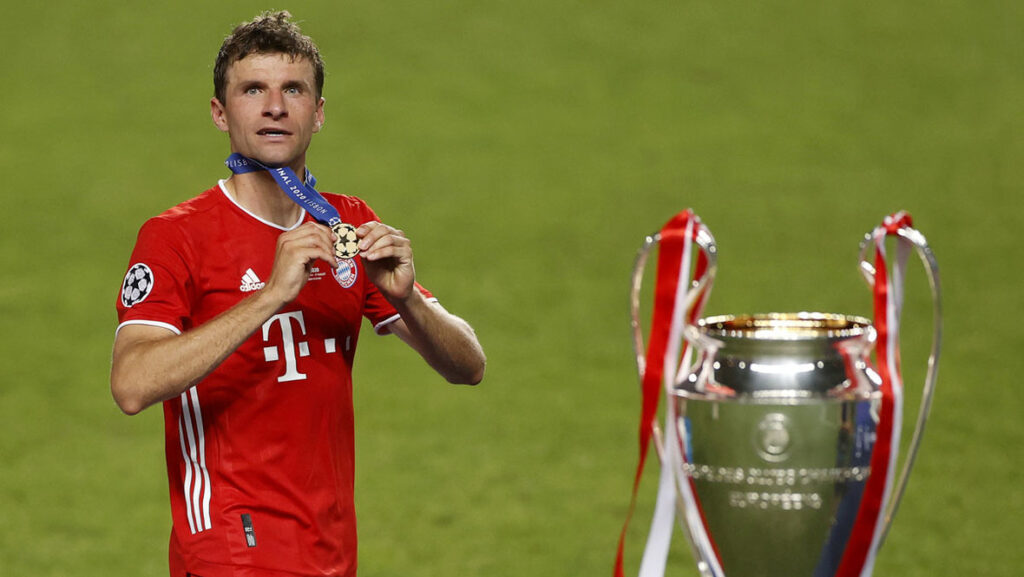
Biography and journey
Thomas Müller came through the Bayern academy and made his first-team debut in 2008. Since then, he has made over 600 appearances, scoring more than 230 goals and providing over 180 assists. For the German national team, he has played 121 matches and scored 44 goals.
Game profile and contribution
Müller himself calls himself a Raumdeuter, meaning interpreter of space. He is a master of imperceptible runs behind defenders, delicate one-twos and second-phase passes. His contribution is often difficult to describe with statistics, although by the numbers he is one of the best assist providers in the club's history.
Achievements
Eleven German league titles, victories in the Champions League and the 2014 World Cup. In critical moments, Müller shows an ability to make the right decisions and be where he's least expected.
Influence and legacy
Müller embodies the Bavarian spirit. Humility, dedication, and a sense of humour combine with professionalism and cool calculation on the field. He has become the link between coaching ideas and their execution by the players.
➤ Franck Ribéry
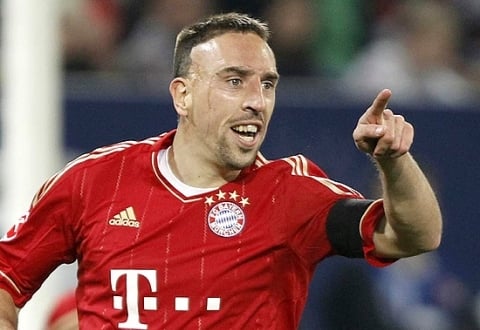
Biography and journey
Franck Ribéry joined Bayern in 2007 from Marseille. For the Munich club, he played 425 matches, scored 124 goals and provided 184 assists. He later played for Fiorentina and Salernitana. For the French national team, he played 81 matches and scored 16 goals.
Game profile and contribution
Ribéry was responsible for creativity on the left flank. He combined dribbling, sharp acceleration, and the ability to move into half-spaces. His interplay with teammates turned positional attacks into penetrating combinations. He was a leader in the dressing room and on the pitch.
Achievements
The winner of the 2013 Champions League and nine-time German champion. His contribution to an era of total dominance in the Bundesliga was key.
Influence and legacy
Ribéry, together with Robben, created a duo that became a symbol of Bayern's attacking prowess. He modelled behaviour for the young wingers. Hard work and character taught the entire attacking line to maintain a high tempo.
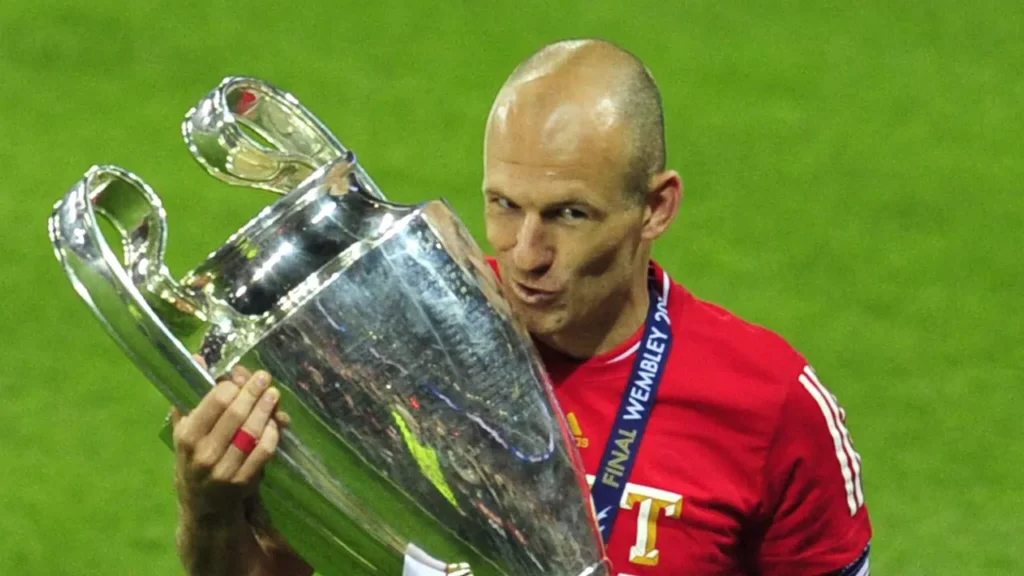
➤ Arjen Robben
Biography and journey
Arjen Robben joined Bayern in 2009 after spells at PSV, Chelsea and Real Madrid. For the Munich club, he played 309 matches, scoring 144 goals and providing 101 assists. For the Netherlands national team, he played 96 matches and scored 37 goals.
Game profile and contribution
Robben was known for his trademark move of cutting in from the right flank to shoot. Opponents seemed to know the trick but found it difficult to stop him. He possessed a powerful initial burst of pace, intelligent pauses, and a brilliant choice of shooting angles.
Achievements
The 2013 Champions League winner and eight-time German champion. His goals in the play-offs and finals regularly became decisive.
Influence and legacy
Robben set the standard for wingers, combining width with play in the half-spaces. He instilled a sense of rhythm and patience in positional attacks among his teammates. Together with Ribéry, he formed a legendary partnership that set the trend for asymmetrical flanks.
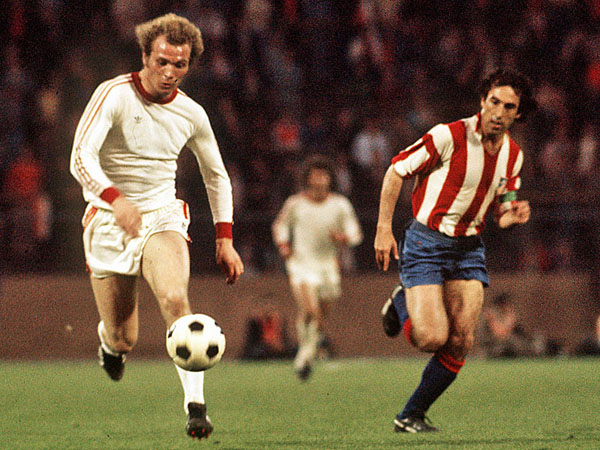
➤ Uli Hoeneß
Biography and journey
Uli Hoeness was part of the golden Bayern Munich of the 70s. He played 336 matches for the club, scoring 119 goals and providing 94 assists. For the German national team, he played 35 matches and scored 5 goals. He ended his career early due to injury, but moved into management almost immediately.
Game profile and contribution
As a player, Hoeness stood out for his speed, sharpness, and ability to attack space. He complemented Beckenbauer and Müller, creating a balance between creativity and finishing attacks. His understanding of the ideal collective game later proved useful in management.
Achievements
Winner of the European Cup from 1974–1976 and the 1974 World Cup. His golden years coincided with Bayern's first European dominance.
Influence and legacy
It was in the role of director that Hoeness left the most profound mark. He tackled the commercialisation of the brand, expanded the sponsorship base, built the infrastructure and academy, and ensured a sustainable financial model. Bayern became a club that not only wins today but also plans for victory 10 years ahead.
➤ The combined influence of legends on Bayern's DNA«
These players forged a multi-layered club identity. Beckenbauer established the style of positional dominance. Müller cemented the culture of efficiency and the value of the final touch. Rummenigge and Hoeneß transformed sporting victories into a sustainable management system. Matthäus and Lahm shaped a leadership model where discipline and intelligence superseded expression. Kahn instilled a culture of responsibility and mental resilience. Ribéry and Robben brought creativity and unpredictability to the wide areas. Thomas Müller became a bridge between eras and proved that footballing intelligence equals talent.
➤ Modernity and continuity
«Bayern» continues to develop the values laid down by its legends. The academy supplies players, targeted recruitment fills specific needs, and tactical flexibility allows for adaptation to different coaches. Winning the 2020 Champions League with its distinctive pressing and direct attacking style demonstrated that the club can remain modern while retaining its traditions. For fans and enthusiasts sports betting The successes of the Munich team serve as confirmation of the team's stability and professionalism. The management still includes many former players today – this maintains a connection with the past and preserves a unified standard of quality.
➤ Conclusion
Bayern's history is read through the destinies of its players. Franz Beckenbauer taught how to defend in such a way as to start attacks. Gerd Müller proved that the most complex element of the game is called a goal. Karl-Heinz Rummenigge and Uli Hoeneß turned the club into a sustainable global project. Lothar Matthäus and Philipp Lahm defined the image of a captain who leads by example and thought. Oliver Kahn gave the Munich club character and resilience. Franck Ribéry and Arjen Robben made Bayern spectacular and unpredictable. Thomas Müller combined all these meanings in one figure of a modern leader. Their collective work created the club's DNA. It's a blend of discipline and freedom, academy and recruitment, local identity and global ambitions. Therefore, Bayern remains not just a winner, but a school of victories, passing from generation to generation.